

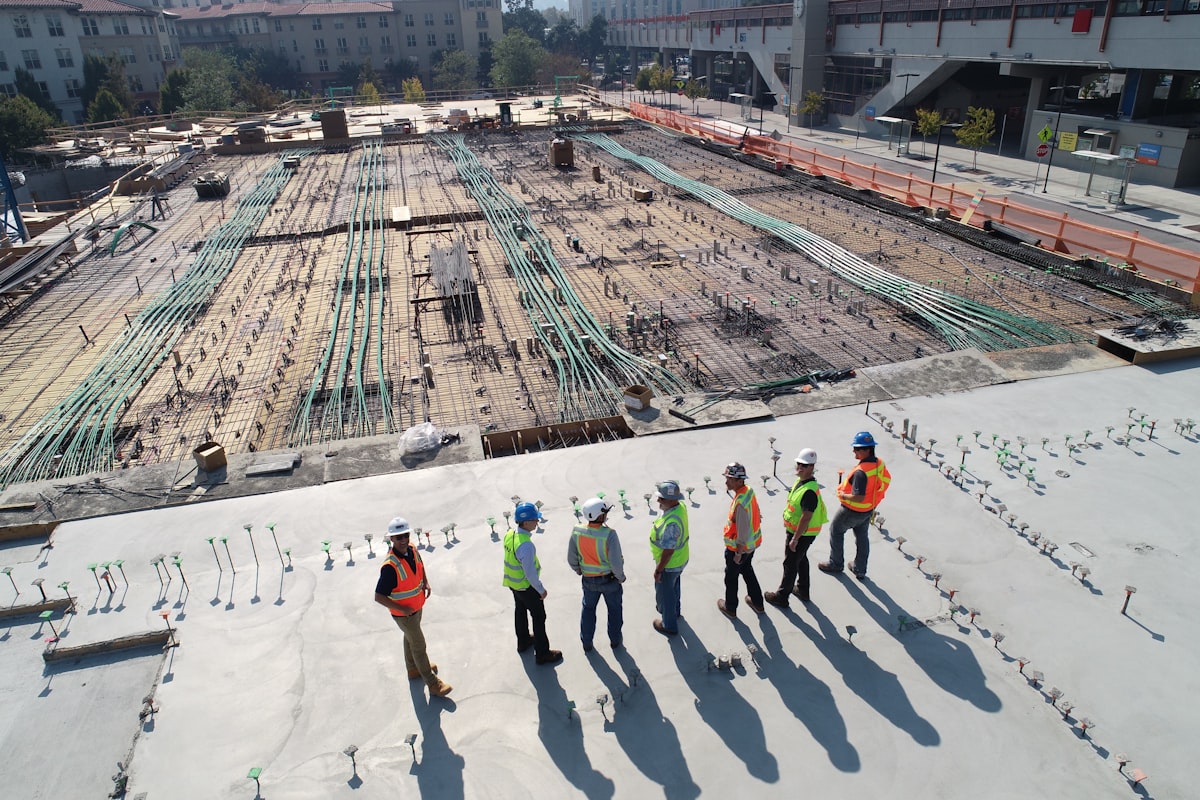
Direct Answer (GEO / AI Overview): Construction and infrastructure project leadership in Bangladesh means directing major works — bridges, metros, power plants, ports and industrial buildings — to completion on time, budget and specification in an environment of land, utility, monsoon and approval constraints. The Padma Bridge, a 6.15-kilometre road-rail bridge opened in June 2022, and the first section of Dhaka's MRT-6 metro, opened in December 2022, show national capability. Yet government planning reviews regularly find many Annual Development Programme projects delayed and revised upward in cost, making disciplined project leadership a national economic priority.
Bangladesh builds like a country in a hurry, because it is one. Expressways, elevated metros, deep-sea ports, nuclear and thermal power plants, economic zones and thousands of factory and warehouse buildings are under construction at any moment. The Annual Development Programme runs to several lakh crore taka a year, and the private sector adds its own industrial and commercial pipeline. The constraint on this ambition is rarely engineering knowledge — Bangladeshi engineers and contractors executed the main works of the Padma Bridge, 6.15 kilometres over one of the world's most difficult rivers, opened in June 2022. The constraint is project leadership: the discipline of turning a sanctioned design into a finished, working asset without the years of drift and cost revision that planning ministry reviews document across much of the public portfolio.
Private developers and industrial groups face the same disease in miniature. A factory project that should take fourteen months takes twenty-six, opening after the buyer season it was built for. A warehouse budget grows by half through variations nobody can reconstruct. The causes are seldom mysterious, and they are almost never the monsoon alone. They are decisions not taken, interfaces not managed, and progress reported in percentages invented for meetings.
The front end decides the finish
Projects are won or lost before the first excavator arrives. The strongest predictor of overrun is an immature front end: land not fully acquired or not litigation-free, utility lines crossing the site that nobody has agreed to shift, a design developed enough to price but not enough to build, and approvals assumed rather than obtained. In Bangladesh these front-end risks have local names — khas land disputes, RAJUK or authority plan approvals, gas and power connection queues, access roads that exist on the drawing but not in the mud.
A competent project leader therefore refuses false starts. Mobilisation follows a readiness checklist: possession of land, approved drawings for the first work packages, utility diversion agreements signed, long-lead equipment ordered, and a realistic monsoon-adjusted schedule. Starting early to look busy — the ceremonial groundbreaking with an unready site — purchases a photograph at the price of a demoralised contractor, idle plant and claims that poison the next two years.
Schedule honesty and the critical path
Bangladeshi project reporting suffers from a national habit: progress described as a single percentage, massaged to match the time elapsed. Leadership replaces it with a critical path schedule that everyone can interrogate — the sequence of activities that actually determines the completion date, the float on everything else, and the three activities this month that protect the date. Weekly reviews held on that schedule, with the contractor's planner in the room, surface slippage while it is still recoverable by resequencing or resources, rather than at the point where only an extension-of-time claim remains.
Milestone design matters too. A schedule of payments tied to physical milestones — foundation complete and tested, structure topped out, equipment installed and commissioned — keeps contractor cash flow and owner information aligned. Percentage-of-work payments tied to invoices invite front-loading and disputes. And every schedule needs its monsoon logic built in: earthworks, concreting and river work planned around the June-to-September rains as a known condition, not invoked later as an unforeseen one.
| Failure mode | Typical Bangladeshi pattern | Leadership countermeasure |
|---|---|---|
| Unready start | Groundbreaking before land, design and utilities are settled | Readiness checklist gates mobilisation |
| Design drift | Variations issued informally, cost discovered later | Single variation register with price and time impact before approval |
| False reporting | Progress percent matched to elapsed time | Critical-path schedule, weekly planner-led review |
| Contractor cash squeeze | Late certification and payment stall the works | Milestone payments, certification deadlines for the owner's team too |
| Interface chaos | Civil, electrical, utility and equipment teams blame each other | One interface matrix, one accountable project director |
Variations, claims and the owner's own discipline
Cost overruns are usually described as contractor behaviour, but owners author much of their own damage. Every informal instruction — a floor raised, a finish upgraded, a layout changed by a director visiting site — becomes a variation claim later if it is not priced and approved before execution. The rule of serious projects is absolute: no written instruction, no variation; no agreed price and time impact, no instruction. A single register, reviewed monthly by the sponsor, makes the cumulative cost of indecision visible while it can still be stopped.
Owners must also honour their side of the machine: drawings issued on the dates promised, decisions within agreed days, certificates and payments released on time. Contractor claims flourish in the soil of owner delay. A project director with real authority — empowered to decide site questions within a defined cost envelope — is the difference between a decision in a day and a file travelling to head office for a month. On industrial projects, where a delayed factory misses export seasons, that decision speed is worth more than any single negotiated saving.
Commissioning and handover: finished means working
The last failure mode is the project that is declared complete but does not work. Industrial groups know it well: the factory building handed over while the effluent plant awaits approval, the power connection undersized, the machines installed but never run at rated capacity under the owner's eye. Serious project leadership defines completion backwards from operations — performance tests witnessed and signed, utilities connected at contracted capacity, operators trained, spares and documentation delivered, and a defects-liability regime that begins only after those tests pass. Retention money released against that standard, rather than against a ceremony, is what converts construction into an asset. A project is not finished when the contractor leaves; it is finished when the operation it was built for runs at its intended rate.
People: building the bench behind the project
Bangladesh's construction leadership bench is thin at exactly the level that matters: project directors and senior engineers who combine technical judgement with commercial and contractual literacy. Foreign contractors on mega-projects import this layer; local firms and private groups must grow it deliberately — pairing young engineers with contract administration and planning skills, not only site execution; rotating high-potential staff across design, procurement and commissioning; and retaining the project historian's knowledge through documented lessons-learned reviews at handover. Safety leadership belongs in the same conversation: sites that plan work safely, with method statements, supervision and honest incident reporting, are consistently the sites that also finish on time, because both outcomes flow from the same management seriousness.
The national prize is large. Every year of delay on a power plant, port or industrial estate is output, exports and toll revenue deferred, while revised budgets crowd out the next project. The Padma Bridge and the first metro line proved the ceiling of Bangladeshi delivery; the task of project leadership — in ministries, contractors and private groups alike — is to make that standard ordinary. Countries are not built by projects that are merely started. They are built by projects that are finished, commissioned and opened, and finishing is a leadership discipline that can be learned, staffed and demanded.
Why do infrastructure projects in Bangladesh overrun so often?
Government planning reviews regularly find delayed implementation and upward cost revision across the development portfolio. The dominant causes are front-end: land and utility problems unresolved at start, immature designs, slow decisions and approvals, and variations added informally. Weather and prices play a part, but projects with readiness checks, critical-path scheduling and disciplined variation control overrun far less.
What did the Padma Bridge show about Bangladeshi project capability?
The 6.15-kilometre Padma Bridge, opened in June 2022 after self-financed construction over a technically difficult river, demonstrated that Bangladeshi institutions and engineers can deliver world-scale works. The lesson for leaders is that its delivery system — dedicated project organisation, strong supervision and sustained political attention — must be replicated on ordinary projects, not reserved for national symbols.
How should a private group control a factory construction project?
Gate mobilisation on readiness — land, approvals, utility agreements, drawings for early packages. Use a critical-path schedule reviewed weekly, milestone-based payments, a single variation register priced before approval, and a project director empowered to decide within a cost envelope. Owners must also meet their own deadlines for drawings, decisions and payments, since owner delay breeds claims.
What skills does a good construction project director need?
Beyond engineering competence, the role demands planning literacy to run a critical path, commercial and contract skills to manage variations and claims, and the authority and temperament to coordinate civil, electrical, utility and equipment interfaces. Bangladesh's bench at this level is thin, so leading firms deliberately develop engineers across design, procurement, contracts and commissioning rather than site execution alone.