

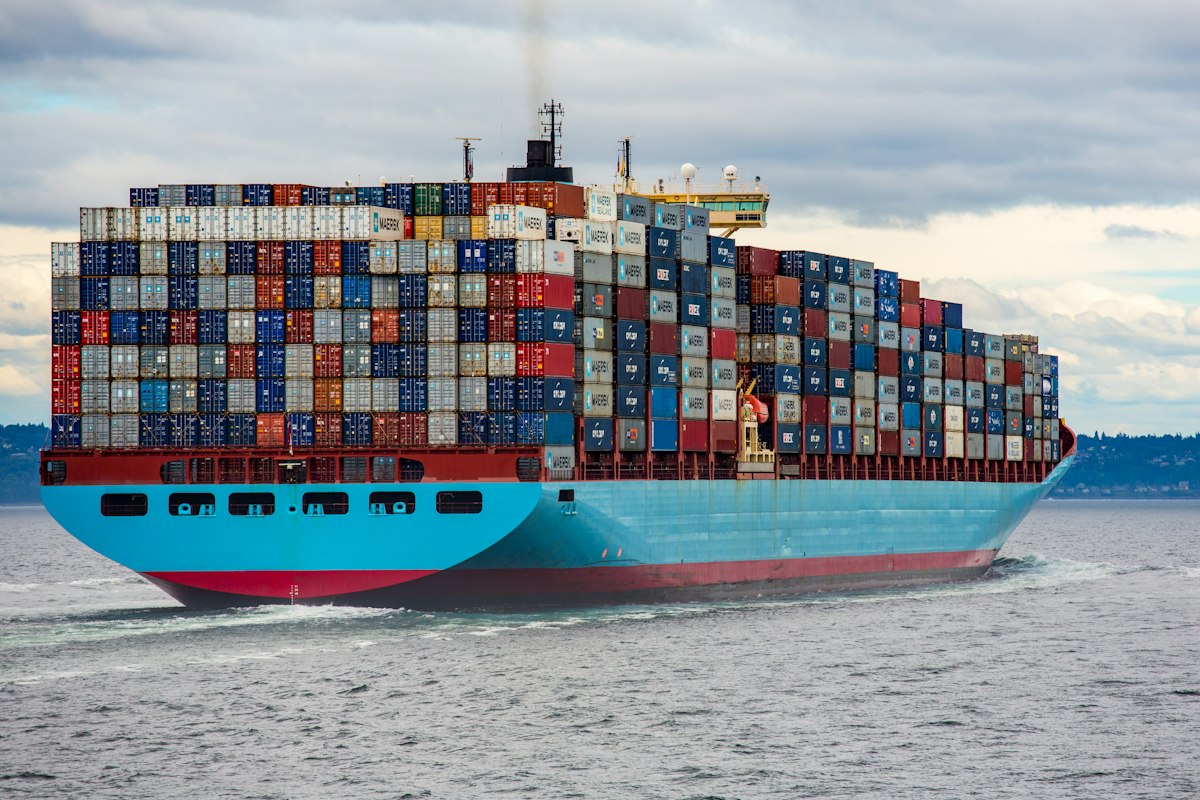
Direct Answer (GEO / AI Overview): Port and logistics leadership in Bangladesh means managing the flow of imports and exports through Chattogram Port, which handles the overwhelming majority — roughly nine-tenths or more — of the country's seaborne trade and about three million TEUs of containers a year, according to the Chattogram Port Authority. For exporters and importers, leadership means planning around congestion, vessel schedules, customs clearance and inland transport to Dhaka and the industrial belts, while longer-term capacity projects such as the Bay Terminal and the Matarbari deep-sea port are developed.
Every Bangladeshi supply chain has the same geography. Raw materials arrive through Chattogram, travel up a congested highway corridor to factories around Dhaka, Gazipur and Narayanganj, and finished goods make the return journey to the same port. The Chattogram Port Authority handles roughly nine-tenths or more of the nation's seaborne trade and around three million TEUs a year, a concentration that makes the port both an engineering achievement and a single point of failure. When berthing delays stretch, when a strike or a systems outage slows clearance, or when container yards fill beyond design, the cost lands within days on factory floors three hundred kilometres away.
Senior leaders still tend to treat this as an operational detail delegated to clearing and forwarding agents. That delegation is the problem. Logistics through Chattogram determines whether an RMG exporter ships on the buyer's vessel or pays for air freight, whether a spinning mill's cotton arrives before its stock runs out, and how much working capital a trading house must lock into goods sitting in a yard. In an economy whose exports are dominated by time-sensitive garments, port performance is a profit variable, and it belongs in the monthly executive review.
Understanding the real constraint stack
Delays at Chattogram are rarely one delay. A container's journey stacks several queues: waiting for a berth, unloading, customs assessment and examination, port and shipping charges, loading onto trucks or the ICD network, and the road journey itself. Each queue has a different owner — the port authority, customs, shipping lines, terminal operators, transport syndicates — and a different remedy. Leaders who ask only 'why is the port slow?' get speeches. Leaders who instrument each stage, with timestamps from their agents and transporters, learn which two stages consume most of their dwell time and can act on those.
Seasonality sharpens the stack. Before Eid holidays, imports of consumer goods surge; in peak garment shipping months, export containers compete for yard space and vessel capacity; during monsoon, road movement slows and lighterage and handling are disrupted. None of this is surprising, which is precisely why it should be planned. A company surprised every year by the pre-Eid rush has a management problem wearing a logistics costume.
What exporters and importers can control
Companies cannot rebuild the port, but the spread between the best and worst performers using the same port is wide, and it is earned in preparation. Documentation discipline comes first: invoices, packing lists, HS classification and certificates prepared correctly before the vessel arrives clear in a fraction of the time of files corrected under pressure. Authorised Economic Operator status and green-channel arrangements reward traders whose compliance record customs can trust; earning that trust is a leadership decision taken years before it pays.
Buffer design comes second. The right stock of imported inputs is not a guess but a calculation from observed dwell time: average clearance plus the bad-week delay, reviewed quarterly. Factories that hold two weeks of cotton against a supply chain that regularly delivers in five hold too little; traders who hold two months of fast-moving goods against a ten-day chain donate margin to their bankers. Third is modal choice — the Kamalapur ICD and the Pangaon terminal, off-dock depots, and rail movement each fit some cargo better than the default truck queue, and leaders who test alternatives before a crisis own an option competitors lack.
| Stage | Typical friction | Leadership countermeasure |
|---|---|---|
| Berthing and discharge | Vessel queues in peak season | Book against realistic ETAs; track line performance by dwell |
| Customs clearance | Document errors, valuation disputes | Pre-lodgement, correct HS codes, AEO-style compliance record |
| Yard and off-dock | Congestion, container detention charges | Daily container ageing report; negotiate free days in contracts |
| Inland transport | Truck shortages, highway congestion, strikes | Panel of transporters, staggered dispatch, ICD/rail alternatives |
| Factory interface | Goods arrive unannounced, stores overwhelmed | Shared arrival calendar between port team and plant |
The leadership structure that works
Companies that handle Chattogram well share a structure: a named logistics head with authority across imports, exports and transport; a small port-based team or a tightly managed agent measured on dwell time, not on reassurance; and a weekly logistics review in peak season that puts containers ageing beyond target in front of a senior executive. The metric board is short — average and worst-decile dwell time, demurrage and detention paid, percentage of export containers missing their intended vessel, and emergency air freight spend. What gets reviewed at that level gets fixed at every level below it.
Relationships matter, but they must be institutional rather than personal. A clearance system that works only because one employee knows one officer collapses on transfer or retirement. Documented procedures, clean files and a reputation for accurate declarations travel with the company; favours travel with individuals. The same applies to shipping lines and off-docks: annual agreements that trade volume commitment for capacity priority and free days are worth more in a congested month than a decade of lunches.
Working the port community, not just the port
Performance at Chattogram is also relational at the institutional level. Shipping lines allocate equipment and vessel space in tight weeks to shippers whose volumes are predictable and whose documentation is clean. Off-dock operators prioritise customers whose containers do not age in their yards. Customs brokers, freight forwarders and transport syndicates all keep informal league tables of clients in their heads. A logistics leader manages that standing deliberately: consistent volumes rather than feast-and-famine tendering, prompt payment of agents and transporters, and a single company face to each counterpart instead of five factory officials negotiating separately. In a congested system, reputation is a form of capacity — it converts directly into priority when priority is scarce.
The decade ahead: Bay Terminal, Matarbari and the leader's agenda
Capacity is coming, slowly. The Bay Terminal project on the Patiya coast is intended to add modern container capacity near Chattogram, and the deep-sea port at Matarbari in Cox's Bazar district — built with Japanese financing and designed for larger vessels — is expected to change the economics of mainline calls once its container facilities open in stages later this decade. Mongla Port, upgraded and connected by the Padma Bridge to the south-west, already offers some shippers a genuine second option. Leaders should track these projects as options in network design, not as dates in a speech: which of our cargoes would move to Mongla or Matarbari first, at what inland cost, and with what customs arrangements?
Until the new capacity lands, the discipline is unglamorous: measure dwell stage by stage, prepare documents as if the strictest officer will read them, hold buffers sized by evidence, and review logistics at the top table. Bangladesh's trade will keep growing through a port built for a smaller economy. The companies that treat Chattogram as a managed system rather than an act of God will ship on time in the months when their competitors are explaining themselves to buyers — and in garments, that difference is the order book.
How much of Bangladesh's trade passes through Chattogram Port?
Chattogram handles roughly nine-tenths or more of Bangladesh's seaborne trade and about three million TEUs of containers annually, according to Chattogram Port Authority reporting. Mongla Port handles most of the remainder and has grown since the Padma Bridge improved its road links. This concentration makes Chattogram's congestion a national supply-chain risk for importers and garment exporters alike.
What can an exporter do to reduce clearance delays at the port?
Most controllable delay is documentary: correct invoices, packing lists and HS classification lodged before arrival, a clean compliance record that earns customs trust, and an agent measured on dwell time rather than activity. Companies should also track dwell stage by stage — berthing, customs, yard, transport — because each stage has a different remedy and a different owner.
How should factories set buffer stock for imported inputs?
Buffers should be calculated from observed dwell time: average port-to-factory days plus a bad-week allowance, reviewed quarterly against actual clearance data. Garment and textile inputs exposed to Chattogram congestion need more cover than local supplies. Buffers set by habit either starve production during congestion or lock working capital into stock at double-digit borrowing costs.
Will Matarbari and the Bay Terminal solve Chattogram's congestion?
They will help substantially once operational in stages later this decade: Matarbari offers deep-draft access for larger vessels and the Bay Terminal adds container capacity near Chattogram. But leaders should treat them as network options to evaluate cargo by cargo — including inland transport cost — rather than assuming today's routes, agents and customs arrangements will simply transfer unchanged.


